 Veteran Owned, Family Operated
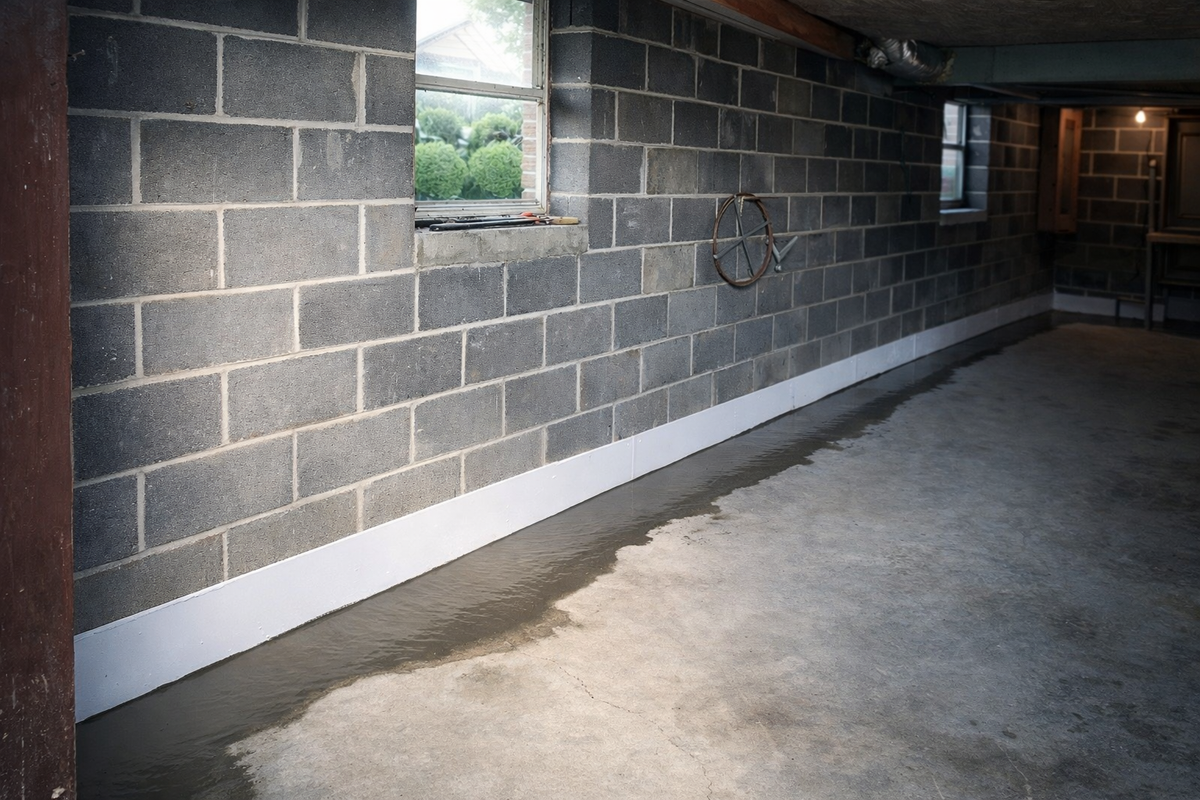
A damp basement is a warning sign that water is working its way into your foundation and lower structure, and if you ignore it, the damage to your home’s structure, air quality, and property value only gets worse.
At Ameri-Dry, we have helped thousands of homeowners throughout East Tennessee and Southwest Virginia solve this exact problem. We know that basement moisture control is essential for anyone who wants to protect their home and family’s health.
Basement moisture control is one of the most important steps a homeowner can take to protect the long-term health of their home.
This guide walks you through what causes basement moisture, what happens when you ignore it, and how professional basement moisture control systems fix the problem for good.
Why Basement Moisture Is a Serious Problem for Homeowners
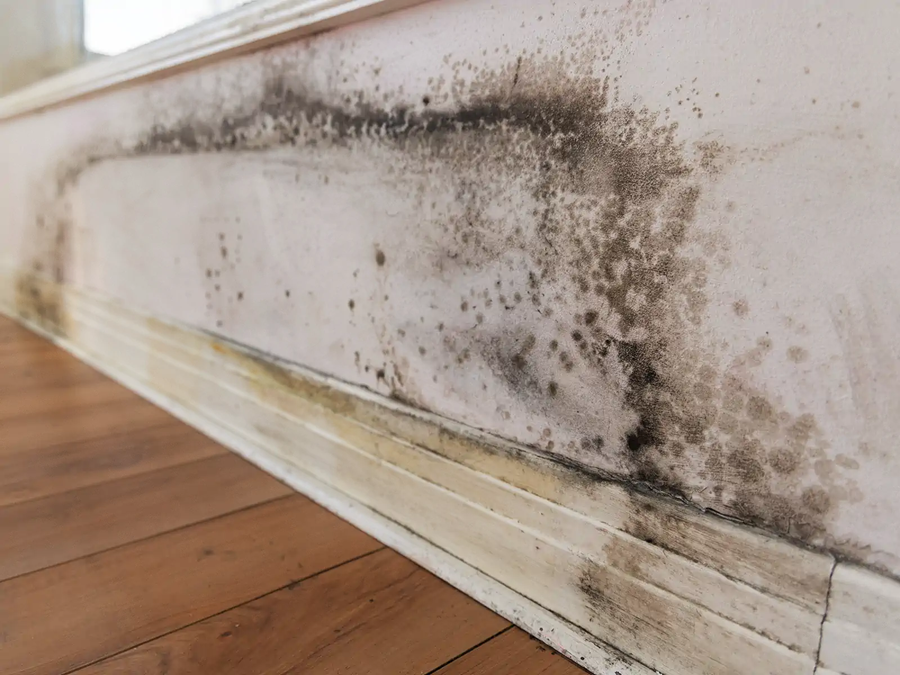
A lot of homeowners treat basement dampness like it’s normal. But even a small amount of moisture can snowball into expensive basement moisture problems if it goes unchecked.
Here is what is really at stake:
- Structural damage. Water weakens foundation walls and floors over time. This leads to cracks, shifting, and settling that cost thousands to repair. Ignoring basement water damage early makes every fix harder and more expensive later.
- Health risks. Damp basements breed mold and mildew. Those spores travel upstairs through your home’s air system in what experts call the “stack effect.” If anyone in your household has allergies or asthma, this makes things worse.
- Lower home value. Buyers and inspectors spot moisture damage fast. A wet basement can knock thousands off your asking price or kill a sale entirely.
Basement moisture problems do not fix themselves. The sooner you invest in real basement moisture control, the less you spend in the long run. Not sure what to look for? Check out our guide on signs of foundation damage.
| ➤ Think your basement might have a moisture issue? Schedule a free inspection and find out for sure instead of guessing. |
Where Basement Moisture Really Comes From
If you want to know how to control moisture in basement spaces, you first need to understand where it starts. Most basement moisture comes from one of three sources:
1. Groundwater pressure. When rain or snowmelt soaks the soil around your home, water pushes against your basement walls and floor. This is called hydrostatic pressure, and it is the number one cause of wet basements.
2. High humidity. Warm, humid air enters through windows, vents, and doors. When it meets your cooler foundation walls, condensation forms. It looks like a leak, but it is really a humidity problem.
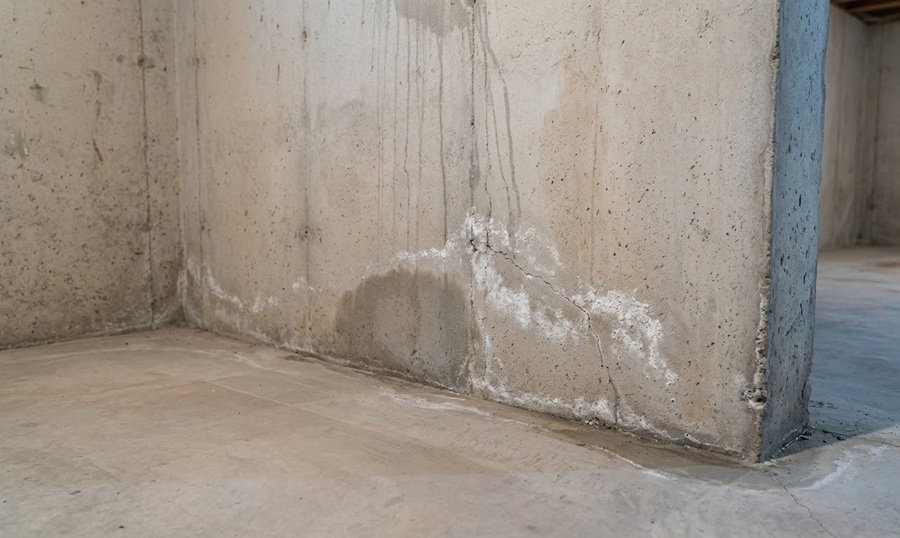
3. Foundation entry points. Water follows the path of least resistance. Cracks in walls, gaps at the cove joint, and porous concrete all invite foundation moisture intrusion into your living space.
Think of your foundation like a sponge sitting in wet soil. Concrete is naturally porous, so it absorbs and transfers moisture whether you see it or not. Understanding how to control moisture in basement environments starts with knowing these entry points.
The Role of Your Basement Foundation in Moisture Problems
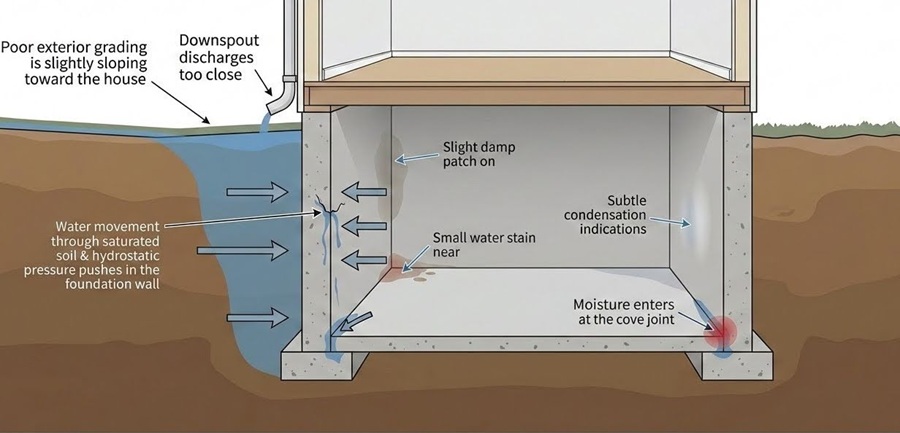
Your basement foundation was designed to support your home. But concrete is not waterproof by nature. Over time, tiny pores and hairline cracks develop. These are normal, but they create open doors for moisture.
The most common spots where foundation moisture intrusion occurs are at the cove joints, where the wall meets the footing. Floor cracks from settling or soil pressure are another frequent entry point. You also want to watch for wall cracks caused by lateral earth pressure or concrete shrinkage. On top of that, pipe penetrations where plumbing passes through the basement foundation give water an easy path inside.
None of this means your home is defective. It is simply how concrete works. Effective basement moisture control means managing these entry points before they cause real damage. Left unchecked, these openings can lead to mold growth, weakened foundation walls, persistent flooding, and air quality problems that affect your entire home.
If you are already seeing cracks or shifting, it may be time to explore foundation repair services.
Why DIY Moisture Fixes Usually Don’t Work Long Term
If you have searched for how to control moisture in basement areas, you have probably tried one of these common fixes:
- Dehumidifiers to pull moisture from the air
- Waterproof paint on the basement walls
- Crack sealants from the hardware store
These tools have their place. A dehumidifier helps manage humidity, and sealing a visible crack is a reasonable first step. But the problem is that none of these solves the root cause.
Waterproof paint peels when hydrostatic pressure builds behind it. Crack sealants fail when the foundation keeps moving. And a dehumidifier cannot stop water that is being forced through your floor by underground pressure.
Real basement moisture control goes beyond surface fixes. It requires professional basement waterproofing systems that manage water at the source, not just the symptoms.
| ➤ Ready for a permanent fix? Talk to our basement moisture specialists about a real solution. |
How Professional Basement Moisture Control Works
Professional moisture control for basement environments is a system-based approach built to manage water from every direction.
Here is how we do it at Ameri-Dry:
Step 1: Inspection and diagnosis. Our trained specialists evaluate your basement to pinpoint exactly where moisture enters and what is driving it. Every home is different, so real basement moisture control begins with understanding your specific situation.
Step 2: Interior basement drainage system. A perimeter drain is installed along the base of your foundation walls. This captures water before it reaches your floor and channels it to a sump pump.
Step 3: Sump pump installation. Your home gets a high-quality sump pump that removes collected water and pushes it safely away from your foundation. Battery backup systems keep things running during power outages.
Step 4: Vapor barriers. We apply heavy-duty liners that block moisture from passing through walls and floors. Combined with a basement drainage system, they create complete moisture control for basement protection.
Step 5: Humidity management. The final piece is a commercial-grade dehumidifier that maintains ideal moisture levels after the water intrusion points are sealed. This is a critical part of any basement waterproofing plan.
This layered approach is what separates a temporary patch from real, lasting basement moisture control. Each component works together to give your home complete protection year-round.
| ➤ Want to see how this works in your home? Request your free basement evaluation today. |
How Moisture Control Protects Your Home Long Term
A properly installed basement moisture control system protects the things that matter most to you as a homeowner.
It starts with foundation stability. Removing water pressure from your walls and floors helps prevent further cracking, shifting, and settling. You avoid the kind of costly basement water damage that catches homeowners off guard.
Then there is the air you breathe. A dry basement means fewer mold spores traveling upstairs. Your whole house breathes easier, and that is a direct result of effective basement mold prevention. Without excess moisture, mold simply cannot grow. That protects your home’s structure and your family’s health at the same time.
On top of all that, a dry, protected basement is a major selling point when it’s time to sell. Buyers trust homes that already have professional basement moisture control systems in place. That means stronger resale value and fewer obstacles at closing.
Think of moisture control as an investment, not an expense. What you put in now saves you from far bigger repair bills down the road. And if you have a crawl space, the same principles apply. Learn more about crawl space moisture control.
When to Call a Basement Moisture Control Specialist
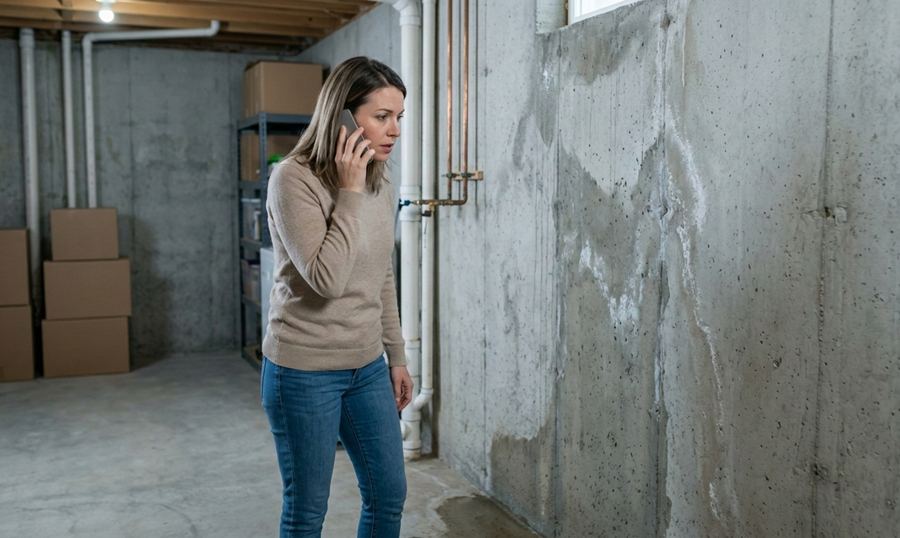
Not sure if your basement needs professional attention? If you have been wondering how to control moisture in basement areas and nothing seems to work, watch for these signs:
- Recurring dampness on walls or floors, especially after rain
- A musty smell that never goes away, no matter how much you clean
- Visible mold or mildew in corners, on surfaces, or behind stored items
- White, chalky deposits on foundation walls (called efflorescence, which means water is moving through your concrete)
- Standing water or puddles after heavy rain
If any of these sound familiar, it is time to call a specialist for proper moisture control for basement evaluation. A good specialist will diagnose the issue and give you honest options with no pressure. Schedule your free inspection here.
| ➤ Don’t wait for the problem to get worse. Call Ameri-Dry today (423) 328-8825 or schedule your free inspection online. |
Protecting Your Basement Starts with Moisture Control
Here’s the thing, basement moisture is not something that disappears on its own. But with the right system and the right team, it is a problem you can solve once and never worry about again.
If you have been searching for how to control moisture in basement spaces, the answer is not another bucket or another coat of paint. It is a professional moisture control for the basement system that tackles water at the source.
At Ameri-Dry, basement moisture control is what we do best. We have spent years helping homeowners take back their basements with engineered solutions built to last. We would love to help you do the same.
Schedule your free inspection today and take the first step toward a dry, protected home.
